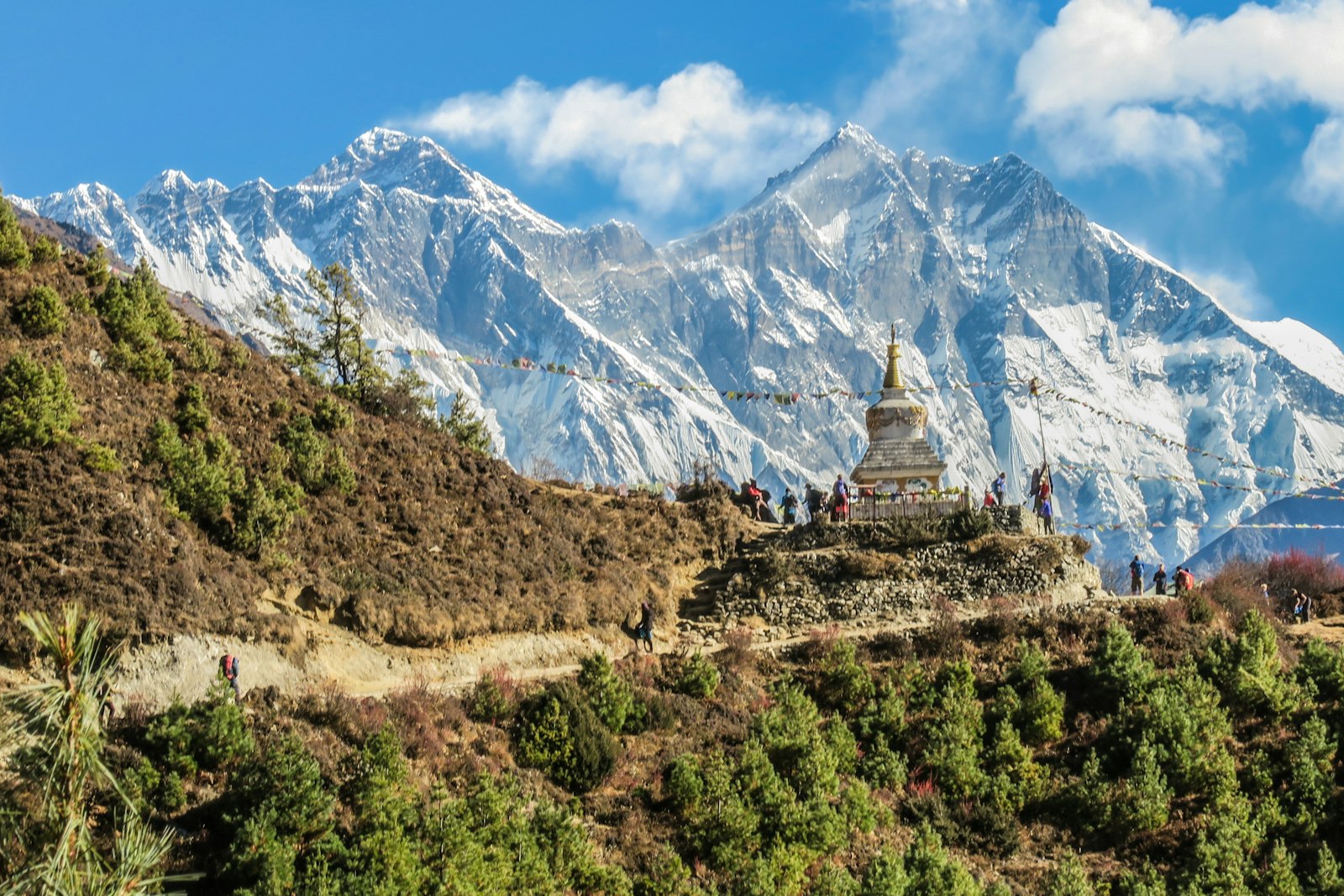
Everest Base Camp Trek
Stand at the foot of the world's highest mountain
Overview
The Everest Base Camp Trek is one of the most iconic journeys on Earth — a pilgrimage to the foot of the world's highest mountain that has captivated adventurers, mountaineers, and dreamers for generations. Winding through the legendary Khumbu region of northeastern Nepal, this 130-kilometre trail delivers an unmatched combination of jaw-dropping Himalayan scenery, rich Sherpa culture, and the raw satisfaction of standing at 5,364 metres beside the Khumbu Icefall, looking up at the summit of Everest itself.
From the moment your small plane touches down on the legendary airstrip at Lukla, the adventure begins. The trail leads upward through rhododendron and pine forests, over swaying suspension bridges strung with prayer flags, past ancient mani walls carved with Buddhist mantras, and through bustling trading villages like Namche Bazaar — the Sherpa capital of the world — where you can sip espresso, browse expedition gear shops, and hear stories of legendary climbs.
The Sherpa people are the heart and soul of the Khumbu. Descended from Tibetan migrants who settled here over four centuries ago, the Sherpas have adapted extraordinarily to altitude and have guided some of the world's greatest mountaineering expeditions. Visiting their gompas (monasteries), sharing butter tea in family-run tea houses, and learning about their Buddhist traditions adds profound cultural depth to every step of the trek.
Acclimatisation days are built into the itinerary at Namche Bazaar and Dingboche, giving your body time to adjust while you explore side valleys and viewpoints. From Kala Patthar at 5,545 metres, the sunrise panorama over Everest, Lhotse, Nuptse, Ama Dablam, and a dozen other giants is simply the most dramatic high-altitude view accessible to non-technical trekkers anywhere on the planet.
Whether you're a seasoned trekker chasing the ultimate Himalayan experience or a determined first-timer willing to train hard and dream big, the Everest Base Camp Trek will reward you with memories that last a lifetime.
Day by Day Itinerary
Board an early morning flight from Kathmandu's Tribhuvan Airport to Tenzing-Hillary Airport in Lukla (2,860m) — one of the world's most thrilling mountain landings. After meeting your guide and sorting your kit, begin the trail descending gradually alongside the Dudh Koshi River through pine forests to the friendly village of Phakding, where tea houses line a sunny river valley.
Permits & Cost Breakdown
Required Permits
| Item | Cost | Notes |
|---|---|---|
| Sagarmatha National Park Permit | $30 USD | Required for all trekkers entering the national park. Issued at the park entrance gate in Monjo. Bring passport-sized photos. |
| Khumbu Pasang Lhamu Rural Municipality Fee | $20 USD | A local fee introduced to support infrastructure and conservation in the Khumbu region. Collected at checkpoints along the trail. |
Additional Costs
| Item | Cost | Notes |
|---|---|---|
| Licensed Guide (per day) | $35–45 USD/day × 14 days | Strongly recommended and increasingly required. Guides provide safety, cultural context, and logistics support. Always hire through a registered agency. |
| Porter (per day) | $20–25 USD/day × 14 days | Porters carry up to 25 kg of gear, freeing you to enjoy the trek. Hiring a porter directly supports local livelihoods. One porter typically shared between two trekkers. |
| Tea house accommodation | $10–25 USD/night × 13 nights | Basic twin rooms are often free when you eat at the lodge. Private rooms with attached bathrooms cost more and are less available at high altitude. |
| Meals along the trail | $30–50 USD/day × 14 days | Prices rise steeply with altitude due to the cost of helicopter and porter supply. Budget around $10–15 per meal at high camps. Dal bhat, noodles, and pasta are staples. |
| Kathmandu–Lukla flights (round trip) | $350–450 USD | Booked through authorised airlines (Tara Air, Summit Air, Sita Air). Prices vary by season — book early for spring and autumn. |
| Travel insurance with helicopter evacuation | $80–150 USD | Non-negotiable for high-altitude trekking. Your policy must explicitly cover helicopter rescue to at least 6,000m. Check the fine print carefully. |
| Gear rental or purchase | $100–300 USD | Quality gear can be rented cheaply in Thamel, Kathmandu. Budget for any essentials you don't already own — a good sleeping bag and down jacket are critical. |
What to Pack
Tips & Important Information
Take Altitude Sickness Seriously — It Can Be Deadly
Acute Mountain Sickness (AMS) kills trekkers on the EBC route every year. Never ascend if you have a persistent headache, are vomiting, or feel unsteady. The only reliable treatment for severe AMS is immediate descent — no matter what time of day or how close you are to your goal. Schedule your acclimatisation days, hydrate constantly (3–4 litres of water per day), and don't let ego or peer pressure push you beyond your body's limits.
Book Flights and Accommodation Early for Peak Season
The spring (March–May) and autumn (Sep–Nov) trekking windows are extremely popular. Kathmandu–Lukla flights operate on small aircraft and book out weeks in advance. Tea house accommodation fills up quickly on the popular route between Namche and Gorak Shep — while you don't need to pre-book every night, securing your guide and flights at least 2–3 months ahead is essential in peak season.
Train Hard for 3 Months Before You Go
The trekkers who enjoy EBC most are those who arrive physically prepared. Build your aerobic base with daily 45-minute cardio sessions (uphill walking, cycling, or stair climbing), then progress to long weekend hikes with a weighted pack. Aim for at least two 20+ km hikes with 1,000m+ elevation gain before departure. Strong legs and good cardiovascular endurance will transform a sufferfest into one of the best experiences of your life.
Budget More Than You Think You'll Need
Prices on the EBC trail increase sharply with altitude — a cup of tea that costs $1 in Namche costs $4 at Gorak Shep. Budget generously for food and drinks, as staying well-fed and hydrated is essential for performance and health. Also factor in hidden costs: charging devices, hot showers, WiFi access, porter tips (standard is $5–10/day), and guide tips ($20–30 at the end of the trip). Set aside $200–300 as a contingency buffer.
Get Comprehensive Travel Insurance Before You Leave Home
Do not attempt the EBC trek without travel insurance that explicitly covers helicopter evacuation at altitudes up to 6,000m. A helicopter rescue from high altitude can cost $5,000–$15,000 USD, and no reputable rescue company will dispatch without confirmation of insurance coverage. Read the policy fine print carefully — many standard travel policies exclude altitudes above 4,000m or 'extreme activities.' World Nomads, True Traveller, and Battleface are popular options for high-altitude trekking.
Frequently Asked Questions
Recommended Gear
We earn a small commission at no extra cost to you.
Book a Local Guide via GetYourGuide
Connect with experienced, licensed local guides for a safe, enriching trek — browse availability on GetYourGuide.